01A quick note before we get into it
AI platform advertising is still early and evolving. OpenAI has discussed advertising as a revenue model and tested limited placements, but there's no publicly available self-serve ads platform as of when I'm writing this. What I'm sharing here is based on what's been publicly reported, early experiments, and where the trajectory seems to be heading — not a finished product you can sign up for today.
The reason I'm writing about it anyway: the preparation that makes sense for AI advertising also makes your website and content better right now for regular SEO. Nothing here is wasted.
02A pattern that keeps repeating
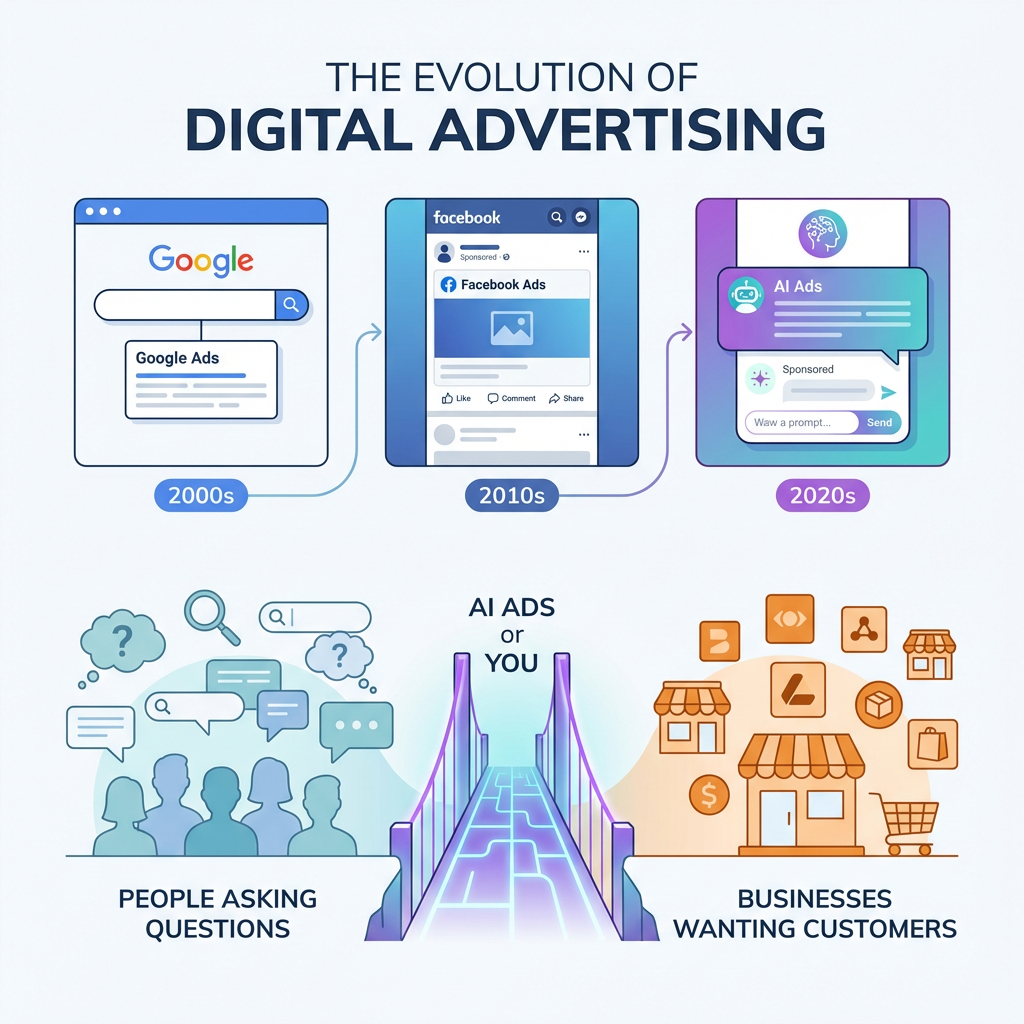
When Google Ads launched, early advertisers paid almost nothing per click and got traffic that converted well. When Facebook opened up advertising, businesses could reach millions of people for pennies. Those windows didn't last long. Once everyone figured it out, CPMs went up and the obvious plays got crowded.
There's another window potentially opening in AI platforms — though how and when exactly is still unclear.
03What ads on ChatGPT actually look like
Not banners. Not pop-ups. That's not the model being tested.
You ask for a pasta recipe — you get the recipe, and maybe a sponsored sauce brand or kitchen tool appears below it. You ask for a Goa itinerary — a hotel or local tour operator shows up as a suggestion alongside the response. The ad sits next to the answer, not in front of it.
OpenAI has been testing this. It's not fully rolled out yet, but the direction is clear and the infrastructure is being built.
That means businesses should think less like banner advertisers and more like answer providers. If your product helps solve the question someone is asking, you want to be eligible to appear in that moment.
04Why this is different from social ads
On social media, you're interrupting. Someone is scrolling through content and you insert yourself.
On ChatGPT, someone types "best laptop under ₹80,000" or "which freelance platform is good for designers in India." They're already searching for an answer. A relevant product showing up at that moment isn't an interruption — it's part of the answer. That's a fundamentally different kind of advertising.
05The opportunity most people are missing
Don't think about this as a user. Think about it as the person who helps businesses get into those answers.
An AI ads agency is something you can start right now, solo, with no team. The pitch is simple: "I'll help you show up when people ask for what you sell." Performance-based pricing. Most small businesses understand that framing and like it. And right now there's almost no competition offering this specifically.
06What you actually need to know
Marketing fundamentals matter first — who is the customer, what problem are you solving, what makes them buy. Without that, nothing else works.
AI search optimisation is the newer piece. It's related to SEO but different — it's about structuring content so AI systems surface and cite it when relevant. Some brands already appear consistently when people ask ChatGPT for recommendations. That's not random. They've set their content up correctly.
Outreach is the third piece. Start with local businesses, coaches, consultants, small e-commerce. They want customers and they don't have time to figure this out themselves.
The basic work is still familiar: clear service pages, FAQs, product details, comparison pages, pricing clarity, author trust, reviews, and schema markup. AI platforms need clean information before they can recommend anything confidently.
07How a small business can prepare now
Start by writing the questions your customers already ask. "How much does it cost?" "Who is this for?" "What makes you different?" "Can I use this in my city?" Then answer those questions clearly on your website.
Add real examples, not just marketing lines. A restaurant can show menu details and delivery areas. A coach can show who they help and what a session includes. A SaaS product can show comparisons and use cases.
This helps normal SEO today and AI discovery later. Even if AI ads take longer to roll out, better content is not wasted.
08What I would offer clients first
I would not start by selling "ChatGPT ads" as if the channel is fully mature. I would sell AI visibility preparation: clean service pages, structured FAQs, comparison content, schema, and tracking for branded AI search queries.
That is honest and useful. The business gets a better website now, and when AI platforms expand advertising or recommendations, the groundwork is already there.
The best early offer is practical: audit what customers ask, fix the pages that answer those questions, and make the business easier for search engines and AI systems to understand.
09Why timing matters
Being early in a new advertising channel beats being perfect later. Lower costs, less competition, and clients who are impressed because nobody else is offering it yet.
Most people will wait until this is obvious. By then it'll be crowded and the easy early wins will be gone. If you start learning this now, you're building something that gets more valuable as the platform grows.
The safe move is not to bet everything on AI ads. The safe move is to learn how answer engines choose sources, improve your site content, and be ready when paid placements become widely available.